
How Do I Overcome Anxiety? Your Guide to Better Mental Health & Emotional Balance
Dec 15, 2025
3 min read
1. Understand the Root of Your Anxiety
To overcome anxiety, begin by recognizing where it comes from.
Anxiety is often triggered by:
Past experiences
Stressful environments
Overthinking and fear of the unknown
Hormonal or physical imbalances
Lifestyle factors
Once you identify your triggers, you regain control instead of feeling controlled by your thoughts.
2. Build a Better Mental Health Routine
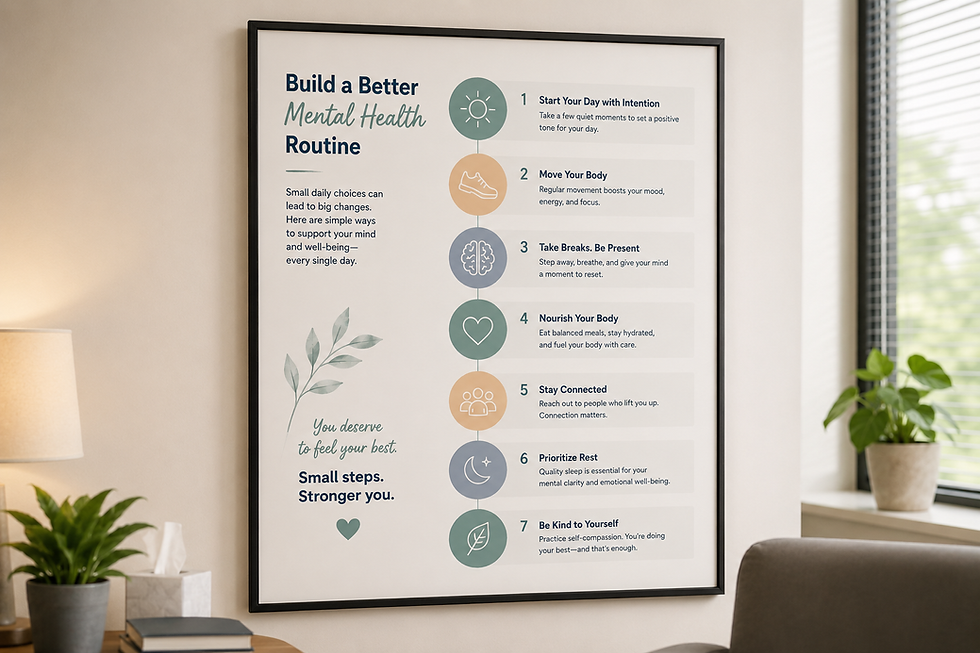
Consistency creates stability. Try weaving these habits into your daily routine:
A slow morning ritual
10–15 minutes of mindful breathing
Journaling thoughts instead of holding them inside
Creating healthy boundaries with work and people
Reducing digital overload
These small adjustments strengthen emotional balance over time.
3. Practice Controlled Breathing to Calm the Nervous System
Deep breathing sends a direct signal to your brain to relax.
Use this quick calming method:4–4–6 Technique
Inhale for 4 seconds
Hold for 4 seconds
Exhale for 6 seconds
This technique is especially effective during moments of panic or racing thoughts.
4. Move Your Body to Release Stress
Your body stores emotional tension. Any form of movement—walking, stretching, yoga, dancing, or workouts—helps release endorphins and naturally boost your mood.
Even five minutes can make a difference.
5. Reframe Negative Thinking
Anxious thoughts often exaggerate worst-case outcomes.
Gently shift your thinking by asking:
“Is this truly happening, or is it just a thought?”
“What is a more realistic version of this situation?”
“What positive outcome is equally possible?”
This helps your brain break out of anxiety loops.
6. Connect With Safe, Supportive People
Isolation increases anxiety. Connection reduces it.
Talking to someone who listens without judgment can immediately ease emotional pressure. And if you’re unsure who to talk to—that’s exactly why mental health professionals exist. You are not meant to figure everything out alone.
7. Improve Sleep to Improve Stability
Sleep and anxiety are deeply connected.
A calmer mind sleeps better, and better sleep supports a calmer mind.
Try:
Dimming lights before bed
Putting your phone away
Taking a warm shower
Drinking evening tea
Maintaining a consistent sleep schedule
Peaceful nights create peaceful days.
8. Limit Stimulants
Caffeine, sugary drinks, and energy boosters can worsen anxiety by increasing heart rate.
Consider swapping them for:
Herbal teas
Lemon water
Decaffeinated options
Small changes can bring major comfort.
9. Practice Grounding Techniques
Grounding brings you back to the present when anxious thoughts begin to spiral.
Try this grounding method:
See 5 things
Touch 4 things
Hear 3 things
Smell 2 things
Taste 1 thing
This technique can interrupt anxious thinking almost instantly.
10. Seek Guidance to Build Better Mental Health Balance
You don’t have to do this alone.
Professional guidance can help you understand your mind, build routines that work for you, and learn coping tools that truly last.
If you feel stuck, overwhelmed, or unsure where to begin, you can book a FREE 15-minute consultation to receive personalized support toward emotional balance, clarity, and relief.
Book Your Free 15-Minute Consultation with us!!!!
This brief call can help you understand your anxiety, explore your mental health needs, and receive expert guidance on the next steps.
Final Thoughts: How Do I Overcome Anxiety?
You overcome anxiety through understanding, consistent habits, emotional support, and choosing to take small steps toward a calmer, stronger version of yourself.
You deserve peace.
You deserve balance.
And you don’t have to find it alone.
Whenever you’re ready, support is waiting for you—starting with that simple, free 15-minute call.


Comments